

PayPal's stablecoin has finally stepped out of the U.S. market. Recently, the company announced the official launch of its PYUSD stablecoin in 70 countries, showcasing its ambition for globalization. The battle for cross-border transfers has begun, with competition heating up against industry giants like Tether and Circle.
The global push aims to make stablecoins more accessible.
In fact, users can now send, receive, and hold digital dollars directly through their PayPal accounts. This advancement meets a real market demand, especially in emerging markets where international transfer fees are high and speeds are slow.
In this context, PYUSD serves as an optimization tool. By removing certain banking intermediaries, it reduces transaction friction. In countries with strict currency controls, PYUSD also allows users to maintain exposure to the dollar without needing immediate conversion.
Beyond simple transfer functions, users in new markets can earn rewards on their PYUSD holdings, making it more attractive compared to traditional bank accounts, particularly in emerging markets where yields are generally low.
Defensive and offensive strategies to tackle competition.
PYUSD has become a strategic tool. Since its launch in collaboration with Paxos in 2023, PYUSD has seen rapid growth. Its market capitalization skyrocketed by 600% in 2025, jumping from about $500 million at the beginning of the year to $4.1 billion. Currently, according to CoinGecko, PYUSD ranks seventh among global dollar-pegged stablecoins.
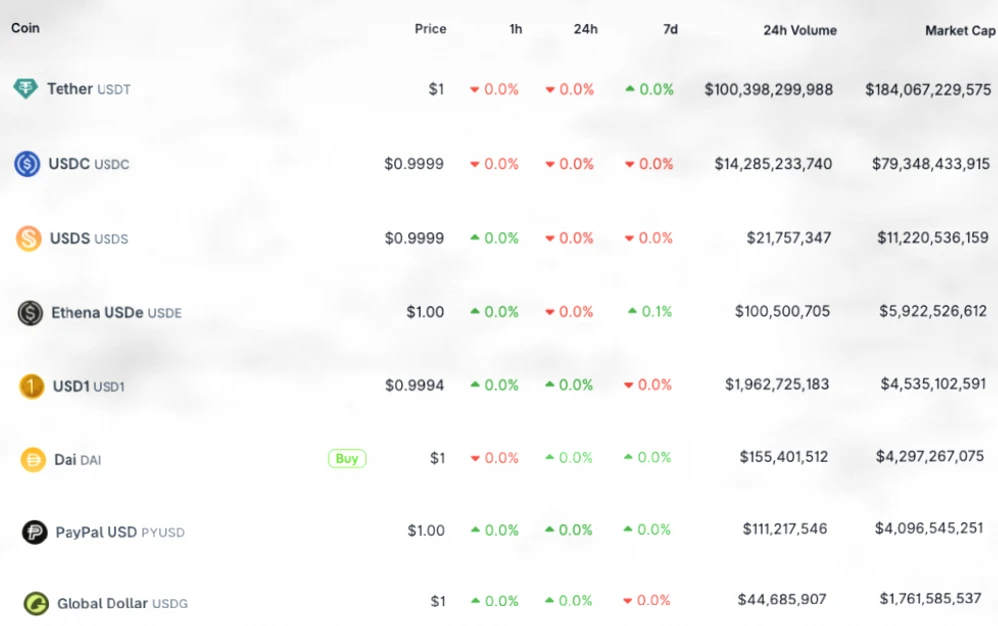
Despite strong momentum, competition remains fierce. Tether dominates with a market cap of $171 billion, followed by Circle with a market cap of $74 billion. In the face of these giants, PYUSD's size is still relatively small. However, PayPal has a significant advantage: a user base of over 430 million and a solid reputation built over two decades in the online payment space.