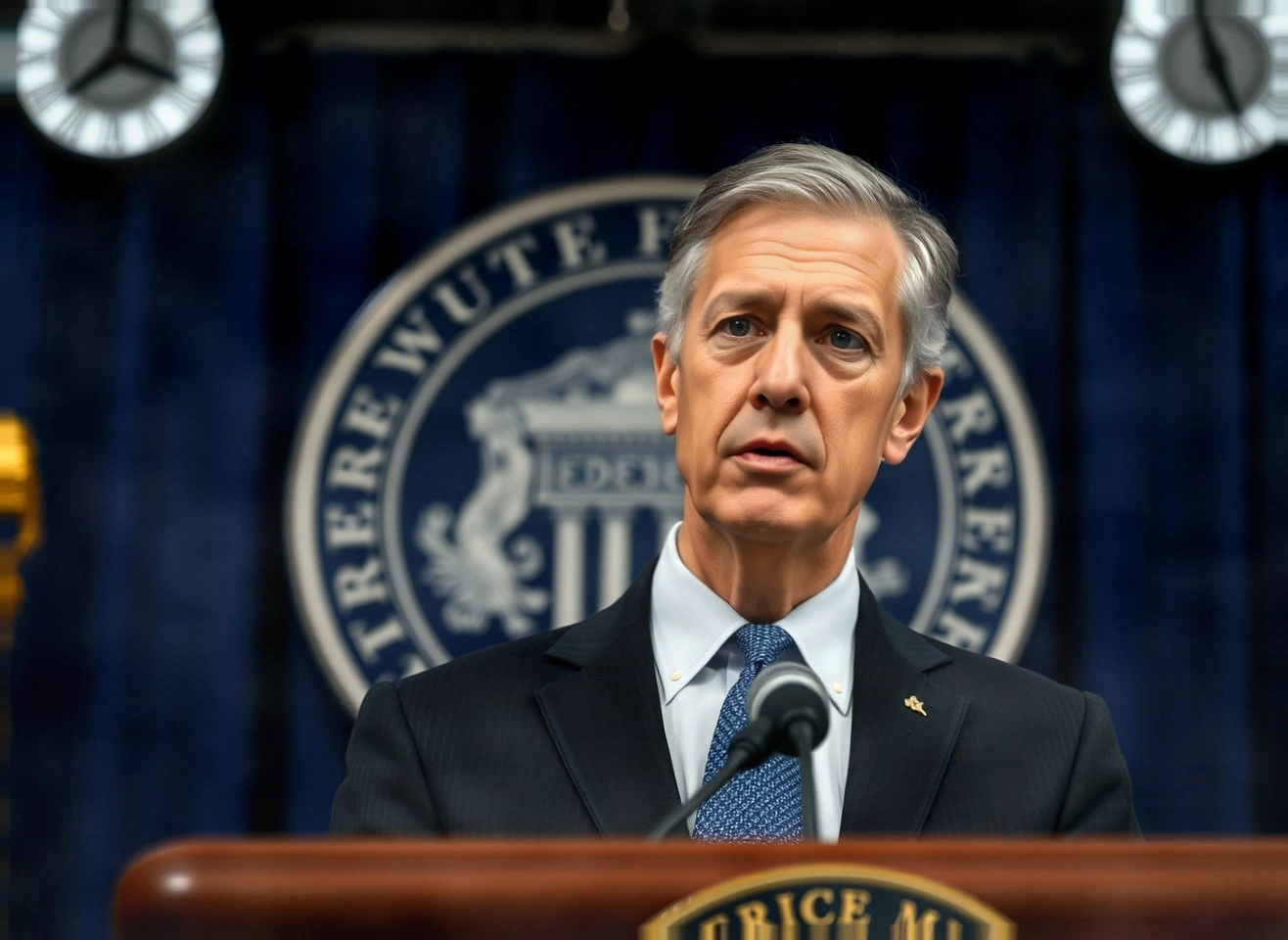
The Federal Reserve's FOMC maintained its benchmark interest rate for the fifth consecutive meeting on March 19, 2025. Chair Powell emphasized data dependency and the need for "greater confidence" on inflation, signaling a potential shift towards rate cuts while stressing the fight against inflation is "not yet complete."
On Wednesday, March 19, 2025, Federal Reserve Chair Jerome Powell addressed the nation at a pivotal moment as the Federal Open Market Committee (FOMC) decided to maintain its benchmark interest rate. Amidst a complex and evolving economic landscape, markets and analysts keenly awaited his remarks for signals on the future direction of monetary policy.
**Fed Maintains Rate Stability Amid Economic Uncertainty**
The FOMC voted unanimously to keep the target range for the federal funds rate at its current level. This marks the fifth consecutive meeting without a rate adjustment, reflecting a cautious approach as the committee assesses the lagged effects of previous rate hikes. Powell underscored a data-dependent stance, stating the committee needs "greater confidence" that inflation is moving sustainably toward the 2% target. He subsequently outlined a measured, meeting-by-meeting policy path.
Recent economic data has presented a mixed picture. For instance, the latest Consumer Price Index (CPI) report indicated some moderation in core inflation, yet inflation in services and housing costs remained elevated. Concurrently, the labor market has demonstrated resilience, with robust job growth but easing wage pressures. This complex backdrop necessitates patience from policymakers.
**Decoding Powell's Key Policy Signals**
Powell provided crucial policy context during his post-meeting press conference. He reiterated the Fed's dual mandate of achieving maximum employment and price stability. Furthermore, he acknowledged progress in the fight against inflation but stressed that the process is "not yet complete." The Fed's preferred inflation gauge, the Personal Consumption Expenditures (PCE) price index, remains above its long-term objective.
**Expert Analysis of the Policy Path**
Economists from major financial institutions immediately offered their analyses. Many noted a subtle shift in the Fed's communication, with the removal of previous language regarding "additional policy firming." This adjustment suggests that the next move is more likely to be a rate cut rather than a hike, although the timing remains uncertain. Historically, the Fed tends to hold rates at their peak for a period before pivoting to easing.
Powell also specifically addressed balance sheet matters, confirming that the process of quantitative tightening (QT) will continue at a slower pace. This process, aimed at reducing the Fed's asset holdings, serves as another form of monetary tightening. Additionally, he dismissed concerns about recent banking sector turmoil, stating the system remains "solid and resilient."
**Market Reaction and Economic Implications**
Financial markets experienced volatility during and after Powell's remarks. Initially, equities reacted positively to the absence of hawkish surprises. However, Treasury yields fluctuated as traders adjusted their expectations for the timing of the first rate cut. The Fed's latest "dot plot" projections offered insights into the committee's views on the future trajectory of interest rates.
0 comment A文章作者M管理员
No Comments Yet. Be the first to share what you think
❯
Profile
Search
Checking in, please wait...
Click for today's check-in bonus!
You have earned {{mission.data.mission.credit}} points today