

The Federal Open Market Committee (FOMC) maintained its interest rates at the March 2026 meeting, but an updated dot plot revealed a more somber outlook. Officials widely anticipate only one 25-basis-point rate cut for the remainder of 2026, with some even suggesting no cuts at all. More importantly, policymakers emphasized the uncertainty surrounding the economic outlook, explicitly acknowledging risks to their dual mandate. Neither the possibility of inflation proving stickier than expected nor the potential for economic growth to deteriorate faster than current data suggests can be ruled out.
Notably, Fed Chair Jerome Powell's term expires in May 2026, and his potential successor, Kevin Warsh, is widely perceived as a more hawkish figure, adding another layer of uncertainty to an already opaque policy outlook. In this context, the Fed's acknowledgment of risks on both sides can be considered an understatement.
Market Reaction: Broad Declines, One Notable Exception
The market reacted swiftly and broadly to the Fed's decision. Bitcoin experienced a roughly 4% decline within 24 hours, trading around the $72,000 mark. Ethereum fell nearly 6% to $2,200. XRP dropped 4.75% to touch $1.45, while Solana saw a nearly 5% decrease, settling at $90. Overall, risk appetite clearly waned.
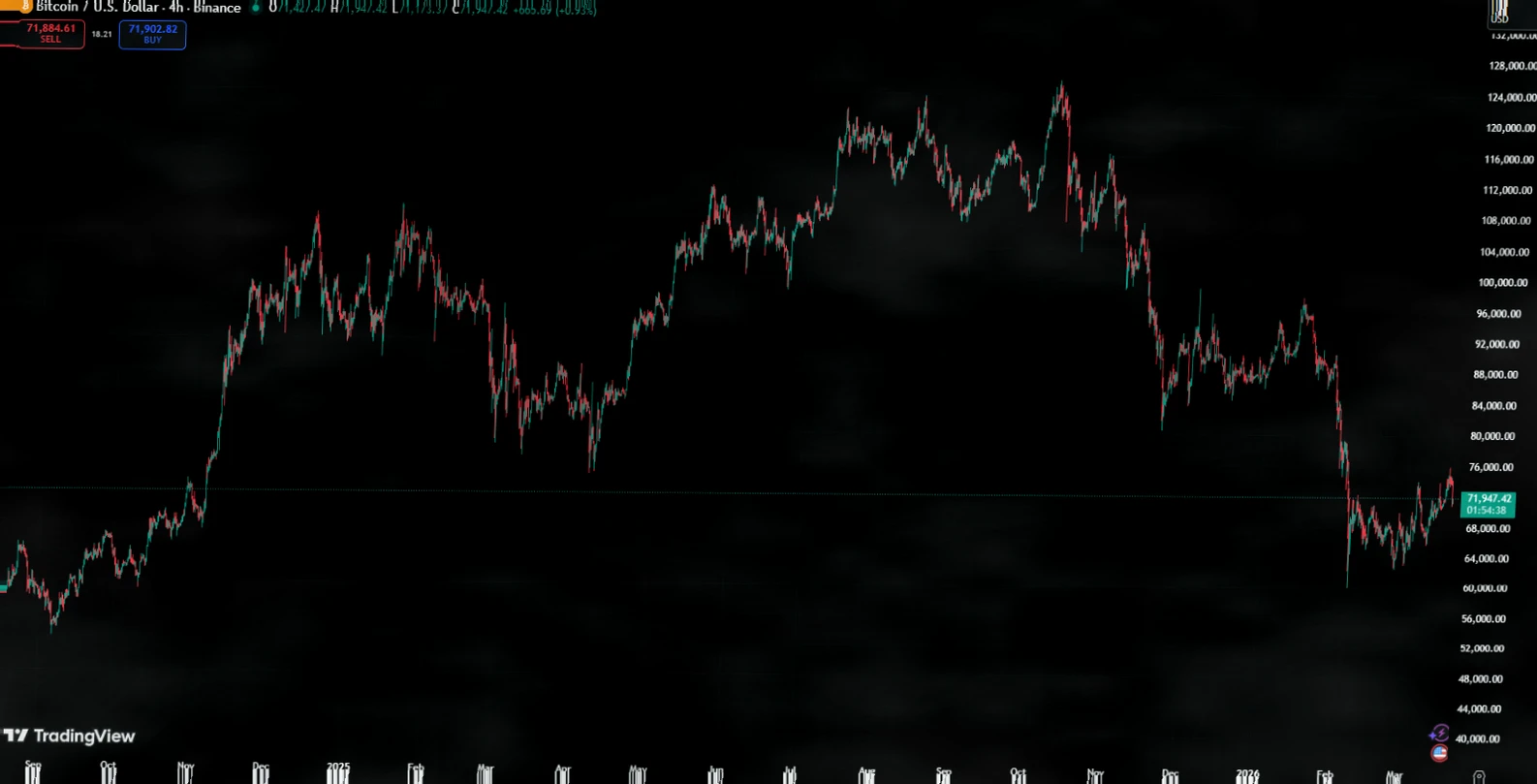
This downturn is not merely a reaction to the Fed's decision; it reflects a market reassessment of the reality of 'higher-for-longer' interest rates, a scenario that structurally diminishes the appeal of speculative assets. When the cost of capital remains elevated, and policymakers themselves admit the next move could be in either direction, institutional capital tends to gravitate towards yield-generating instruments. Cryptocurrencies, by their nature, do not generate income, and their rationale within a portfolio becomes difficult to sustain when Treasury bills offer a competitive alternative and policy direction is highly uncertain.
However, there was one notable exception.
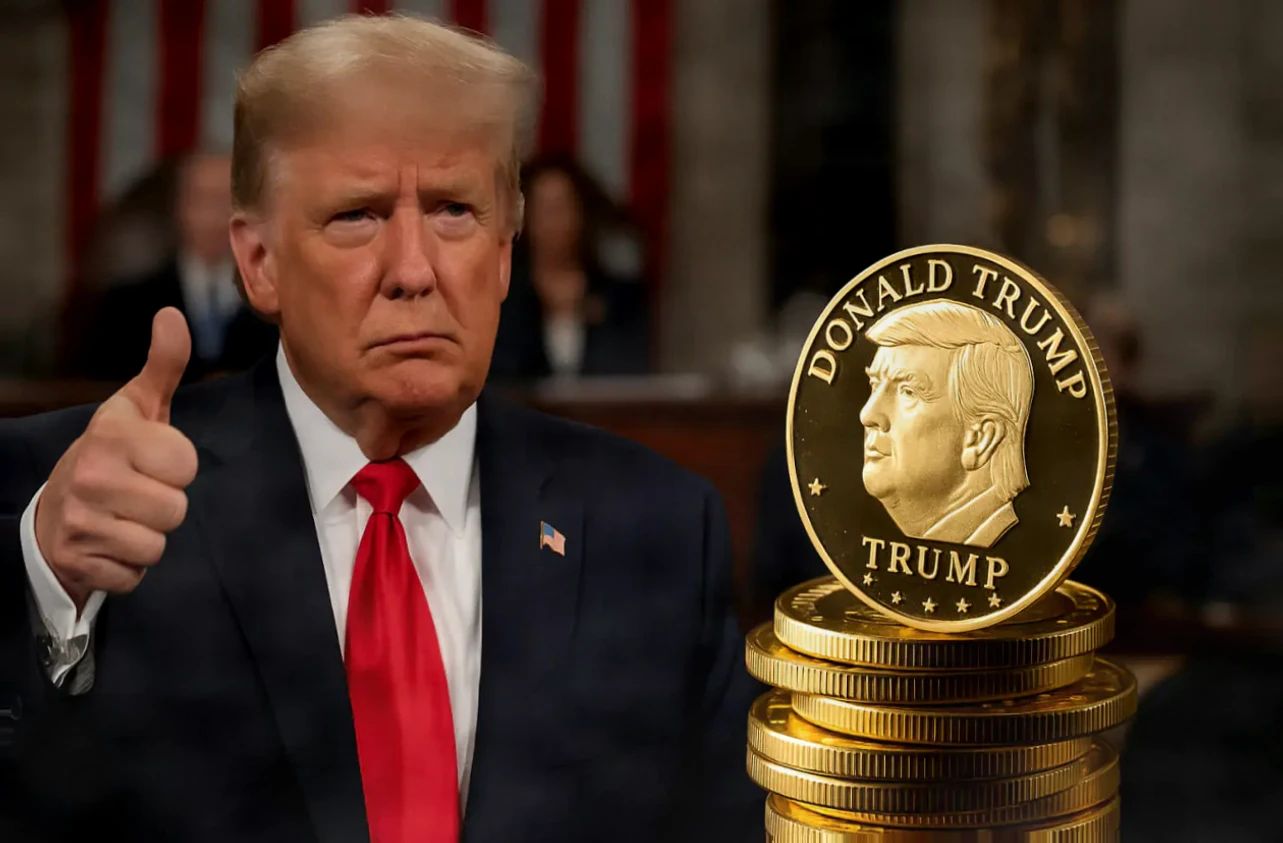
The rise of the TRUMP memecoin, driven by an invitation to Mar-a-Lago, was seemingly priced in.
The significance of this event extends beyond mere price fluctuations; it signals that traditional financial infrastructure is beginning to take on-chain transactions seriously, viewing them as legitimate distribution channels rather than mere experiments. For Hyperliquid, in particular, the licensing agreement with S&P Dow Jones has brought institutional-grade legitimacy that most crypto projects can only dream of.
Banks' Outlook for 2026
Major financial institutions have updated their forecasts for the Fed in recent weeks, with market consensus clearly shifting towards caution.
Morgan Stanley anticipates two rate cuts starting as early as June, contingent on a cooling labor market. They specifically highlighted a risk threshold: if oil prices breach $125 per barrel, the entire narrative could flip, with recession becoming a more likely outcome than rate cuts. BlackRock's iShares division forecasts one to two rate cuts later this year, but this hinges significantly on stability following the Fed leadership transition in May. UBS, which previously expected rate cuts in the first quarter, now sees this as unlikely, with its analysts increasingly adopting a 'wait-and-see' stance.