According to data from the Bank for International Settlements (BIS), retail investors have significantly increased their gold purchases over the past six months, with volumes tripling. Concurrently, institutional investors on Wall Street have accelerated their gold selling pace in the last four months.
Data reveals that from the end of Q3 2025 to the end of Q1 2026, the cumulative inflow of funds from retail investors into the gold market surged from approximately $20 billion to about $60 billion, marking an increase of nearly threefold. The BIS noted, "Retail investors have gone all-in on precious metals."
Over the past year, gold prices have cumulatively risen by 60%. Some cryptocurrency proponents speculate that gold's strong performance might come at the expense of Bitcoin, which is viewed by some as an equally important store of value asset.
However, BIS data also indicates that institutional investors began selling gold around mid-November and accelerated this trend after a pullback in the precious metals market in January of this year. 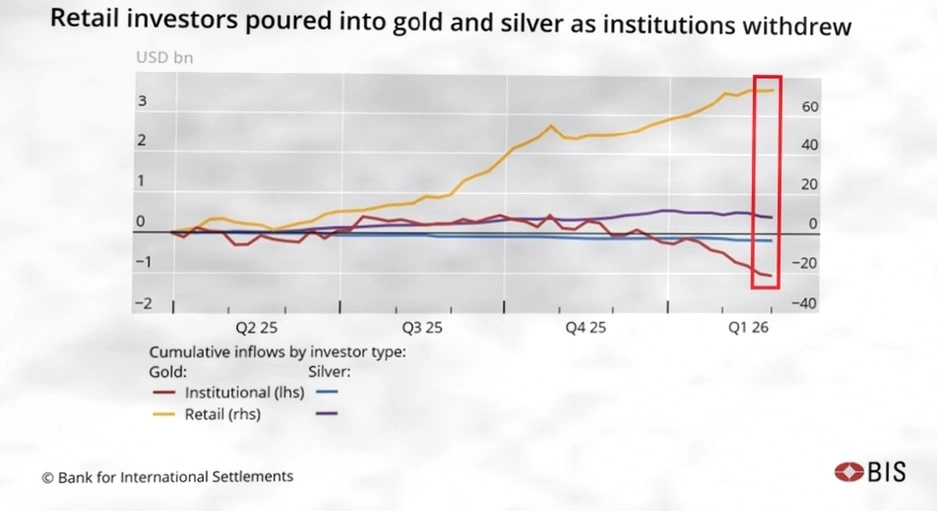
Leverage Liquidations Exacerbate Commodity Price Declines
The BIS report points out an abrupt reversal in the prices of precious metals like gold and silver between late January and February 2026. Specifically, "daily rebalancing of leveraged ETFs and margin calls triggered liquidations amplified price swings," particularly in the silver market. The report also mentioned that prior to the price crash, small speculative derivative traders in the "non-reporting" category had accumulated substantial leveraged long positions in silver.
The BIS emphasized that the sudden price drop and soaring volatility in precious metals "demonstrated the role of retail flows and the amplifying effect of forced selling from leveraged ETFs, trend-following investors (such as commodity trading advisors), and margin dynamics."
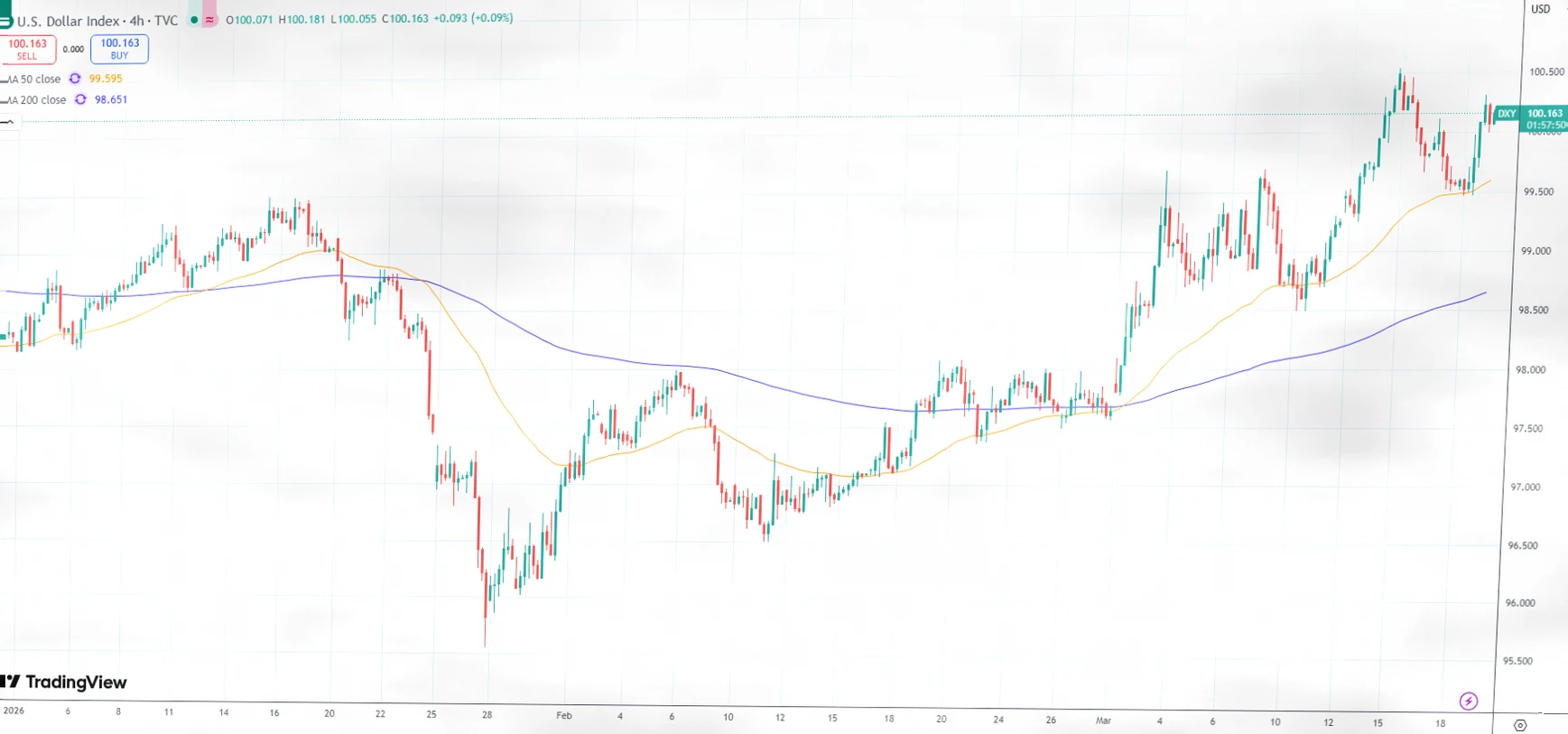
Dollar Strengthens While Commodities and Cryptocurrencies Weaken
Meanwhile, the cryptocurrency market has seen a decline of approximately 43% since its total market capitalization peaked last October. Retail investor interest and sentiment towards digital assets have cooled significantly, with the market remaining at bear market levels.