

A recent survey indicates that Gen Z has the highest acceptance of high-risk or speculative investments among all generational groups, with a rate of approximately 75% to 78%. This phenomenon is not coincidental; it is closely related to the current state of wealth accumulation across generations and the economic pressures they face.
Data shows that nearly 70% of American adults report that they invest or may invest in high-risk assets due to feeling financially behind. Among them, Gen Z responded with the highest percentage. Following closely are Millennials, with a rate of about 70% to 72%. The percentage for Gen X drops to around 62% to 64%, while Baby Boomers and older generations have the lowest rates, approximately 48% to 50%.
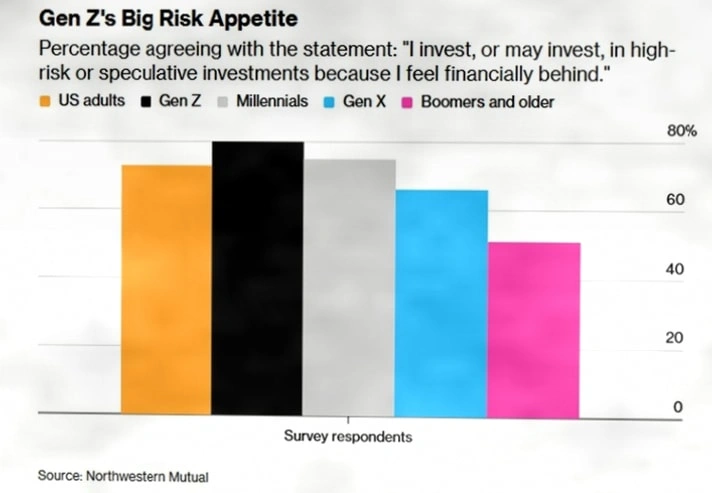
This generational difference reflects the curve of wealth accumulation. As individuals age, they have more time to accumulate wealth, and the need to bridge financial gaps through speculative risks decreases. Gen Z, being the last generation to enter the labor market and investment space, has accumulated the least wealth while facing a more challenging and costly economic environment than any previous generation. Therefore, they are more motivated to accept high-risk investments as a means to compensate for financial gaps.
The wording of the survey questions is crucial, positioning risk tolerance as a strategy to cope with the feeling of being “financially behind,” rather than merely a matter of confidence or speculation. This is particularly key to understanding the popularity of cryptocurrencies among young investors. Data shows that Gen Z's investment in cryptocurrencies is not driven by recklessness or speculative tendencies, but rather by a perceived financial necessity. They believe that traditional savings methods or the returns from index funds are insufficient to bridge their wealth gaps.
In this context, Bitcoin, altcoins, and other speculative digital assets become reasonable choices for Gen Z due to their potential for asymmetric returns. For instance, an annual return of 20% from an S&P 500 index fund is negligible for Gen Z, who have a weak wealth base and face decades of wealth deficits. In contrast, the potential for 10x returns from speculative assets, despite being less likely, could fundamentally address the issues they face.
The nearly 28 percentage point gap between Gen Z (about 77%) and Baby Boomers (about 49%) is not a trivial difference in risk appetite, but rather a structural divide. Baby Boomers accumulated wealth during a time of rising real estate values, widespread pension availability, and a low-barrier stock market. In contrast, Gen Z faces a housing market where median home prices are several times their annual income, along with traditional retirement savings tools that require decades of compounding to accumulate sufficient capital. This starkly different economic starting point shapes their relationship with financial risk in fundamentally different ways.