

How secure is USDC's compliance record?
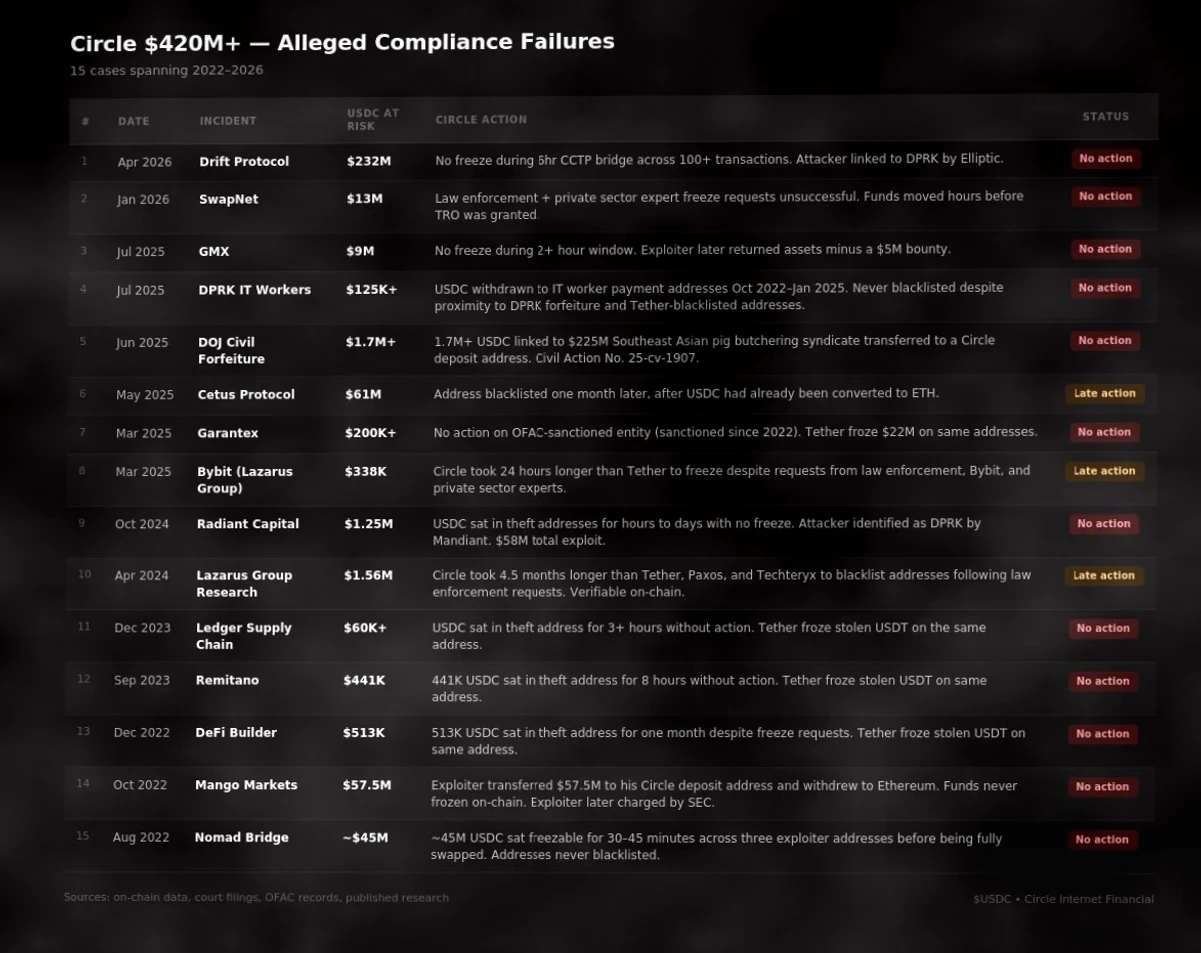
Despite USDC's strong performance during various industry crises and its reputation as the gold standard for maintaining its peg, doubts are growing about Circle's commitment to legal obligations. According to ZachXBT, since 2022, Circle has been accused of failing to take compliance measures in over $420 million worth of transactions linked to illegal or suspicious activities. These instances include Circle's failure to freeze funds or blacklist accounts, even when evidence of wrongdoing was present.
Major incidents highlight ongoing compliance failures
Additionally, the vulnerability attack on Nomad Bridge left approximately $45 million of USDC temporarily exposed in three different wallets for half an hour, yet Circle did not take any blacklisting measures. These events are part of 15 compliance failures between 2022 and 2026, raising ongoing questions about USDC's claims of regulatory superiority over its competitors.
Circle's regulatory statements are under scrutiny
Circle positions itself as the most compliance-focused stablecoin in the market, backed by robust compliance procedures and U.S. legal support. Its token contract even includes technical features that allow for freezing and blacklisting assets. The terms of service explicitly reserve Circle's right to restrict access when illegal use is suspected. Despite these provisions, ZachXBT argues that Circle has failed to effectively utilize its tools at critical moments, undermining its strongest marketing argument.
The recent Drift Protocol hacking incident, investigated in 2026, further highlights this disparity. Despite the existence of freezing mechanisms and clear service terms granting Circle the authority to take preventive measures, the company repeatedly missed opportunities for effective intervention and limiting systemic damage.
“Circle has developed an excellent product, and I personally hold USDC. This is not an attack on them, nor do I wish for their failure. However, their compliance decisions have real-world consequences. Years of inaction have cost the crypto ecosystem hundreds of millions, even as law enforcement, private sector participants, and their own infrastructure urged action,” ZachXBT wrote. “Circle has all the resources to improve but has failed to do so. So I have to ask: Who does Circle really serve? As a compliant, publicly listed U.S. company, Circle bears a higher standard to its users and the broader community.”
These findings have put Circle under renewed scrutiny, intensifying the debate over the extent to which major stablecoin issuers fulfill their legal and ethical responsibilities. As global regulators increase their focus, market participants are calling for key players in the digital asset space to provide clearer and more proactive compliance measures.
In the face of growing criticism, industry observers advise investors and users to remain vigilant, emphasizing the need to look beyond marketing statements when assessing the safety of stablecoins.