

How Institutional Players Are Reshaping the Bitcoin Narrative
Every cycle brings new narratives to the cryptocurrency space, attracting new players into the market. Between 2024 and 2025, a wave of large institutions is expected to enter due to the approval of spot ETFs, legal advancements, and changes in the U.S. political climate. This influx of institutional participation not only enriches the diversity of investors but also complicates traditional on-chain analysis, rendering past analytical tools unreliable.
Take Ki Young Ju as an example; in March 2025, he pointed out the beginning of the crypto bear market by observing multiple on-chain indicators. However, by the end of the year, Bitcoin reached an unprecedented high of $120,000. Ju later admitted that his prediction failed to account for the drastic changes in the crypto market—changes driven by new forces and factors that are not yet fully understood.
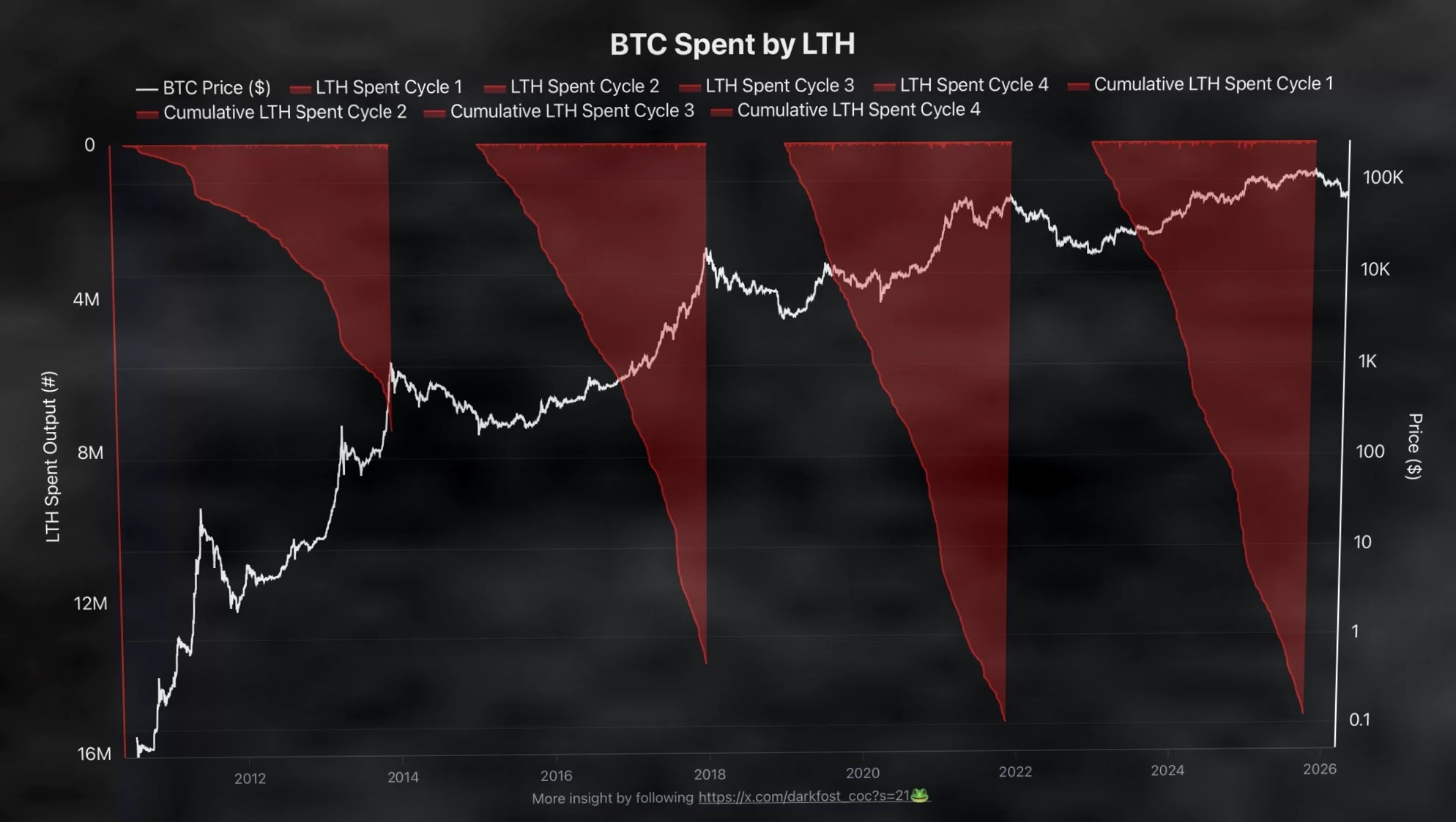
As more companies enter the crypto space, internal trading has become more frequent, further distorting the original on-chain data. In reality, the true selling pressure from long-term holders is lower than the surface numbers suggest, as a significant portion of Bitcoin's liquidity is merely a reallocation of institutional assets.
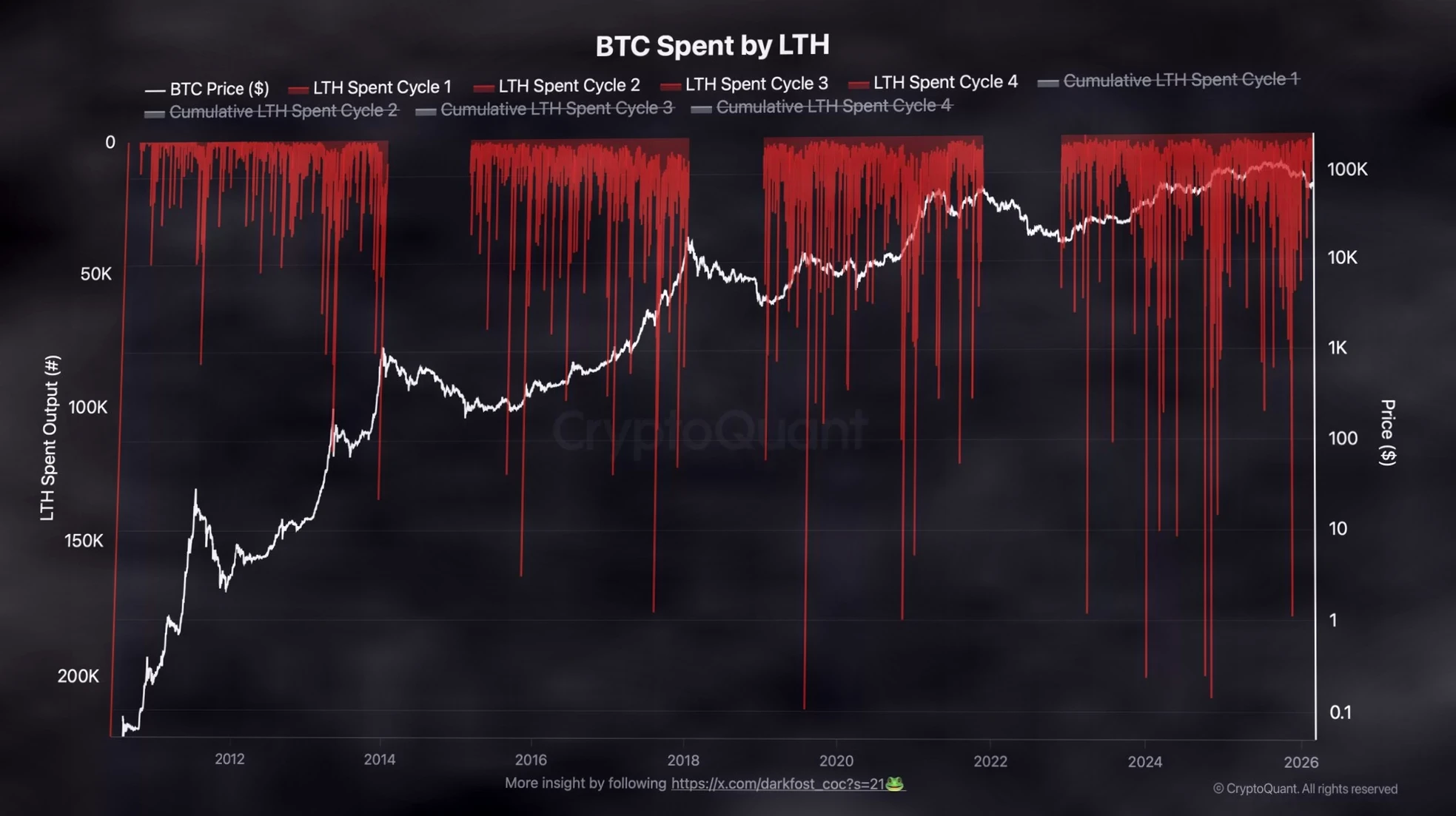
Real structural changes began to manifest in January 2024, when the first spot Bitcoin ETFs were launched. Currently, these ETFs hold approximately 1.3 million Bitcoins, accounting for about 6.7% of the total supply. These funds are designed to serve long-term investors, typically maintaining stable reserves. Meanwhile, major holding companies have accumulated around 1.1 million Bitcoins, roughly 5% of all coins, repositioning Bitcoin as a corporate reserve asset. These developments mean that the so-called long-term holders now include many institutional players, a shift that could bring greater market stability but will also test the relevance of traditional holding definitions in this new era.
Why Bitcoin Trades Like Tech Stocks Now
How has Bitcoin become so closely tied to tech stocks? Before 2021, the cryptocurrency market faced many challenges, particularly volatility, but its rhythm was relatively internal and independent. Recently, as mentioned, the characteristics of long-term investors have changed dramatically, fundamentally altering the market structure.
Old methods of analyzing crypto cycles now seem outdated. This not only discards classic approaches but also paints a new future for digital assets. Past participants included “diamond hands” and short-term traders, while now ETF participants and reserve companies—a new category referred to as “steel hands”—have become significant components of the market. Especially within ETFs, these “steel hands” are traditional traders and institutional managers accustomed to risk-calculation strategies, viewing Bitcoin as any other high-volatility, tech-driven asset. Consequently, market fluctuations triggered by tech stocks increasingly influence Bitcoin's price, particularly as the capital flows within ETFs rapidly ripple through the broader market, prompting other traders to follow suit.