Bitcoin price rebounds to $72,000 as exchange reserves hit their lowest since 2020. Analysts suggest the price recovery and reserve decline are linked, reflecting a tightening supply structure. The ongoing decrease in exchange reserves indicates increased investor intent to hold long-term, potentially easing spot market selling pressure.
Bitcoin prices surged back above the $72,000 mark on Friday morning. On-chain data indicates that beneath the price volatility, Bitcoin's supply structure is quietly tightening.
The simultaneous occurrence of price recovery and declining exchange reserves has caught the attention of analysts. They believe there is a close connection between these two trends, and it is not a coincidence.
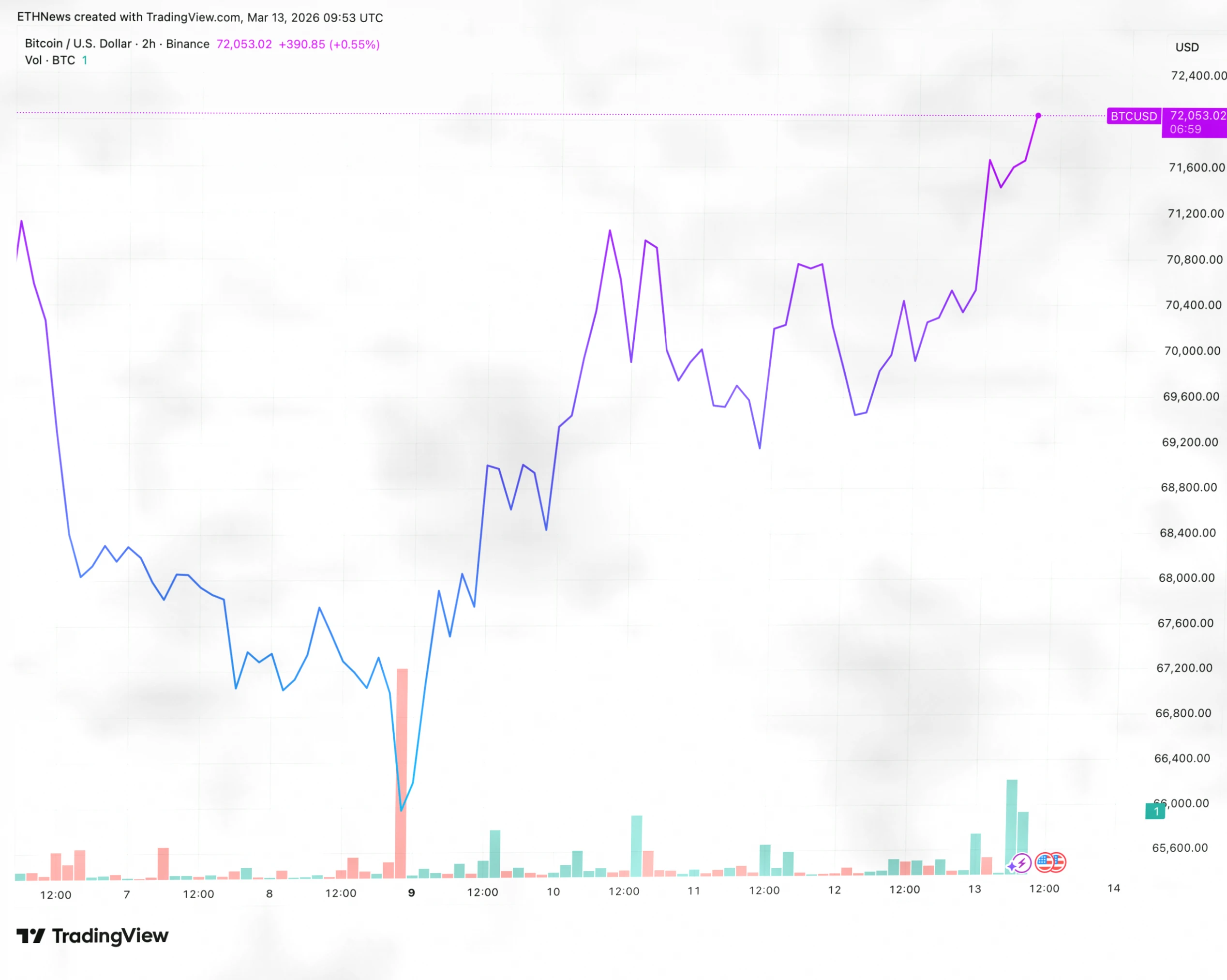
As of press time, Bitcoin was trading at $72,053, up 3% on the day, fully recovering from the March 9 low of around $65,900. A two-hour chart shows that Bitcoin's price accelerated upwards from the early hours of March 13, breaking through the $71,600 resistance level and rising to an intraday high just above $72,000.
This rally was accompanied by significantly higher volumes than the previous slow recovery phase. The buyer volume bar on March 13 was one of the largest recorded since the initial capitulation rally. Market sentiment indicators present a mixed picture: the Fear & Greed Index is at 15, in the extreme fear zone, while the 14-day Relative Strength Index (RSI) is at 51.94, a neutral reading indicating neither overbought nor oversold conditions in the medium term. The 50-day Simple Moving Average (SMA) is at $72,748, slightly above the current price, serving as an immediate resistance level that bulls need to break to confirm a recovery momentum.
Exchange Reserves Plunge to Six-Year Low
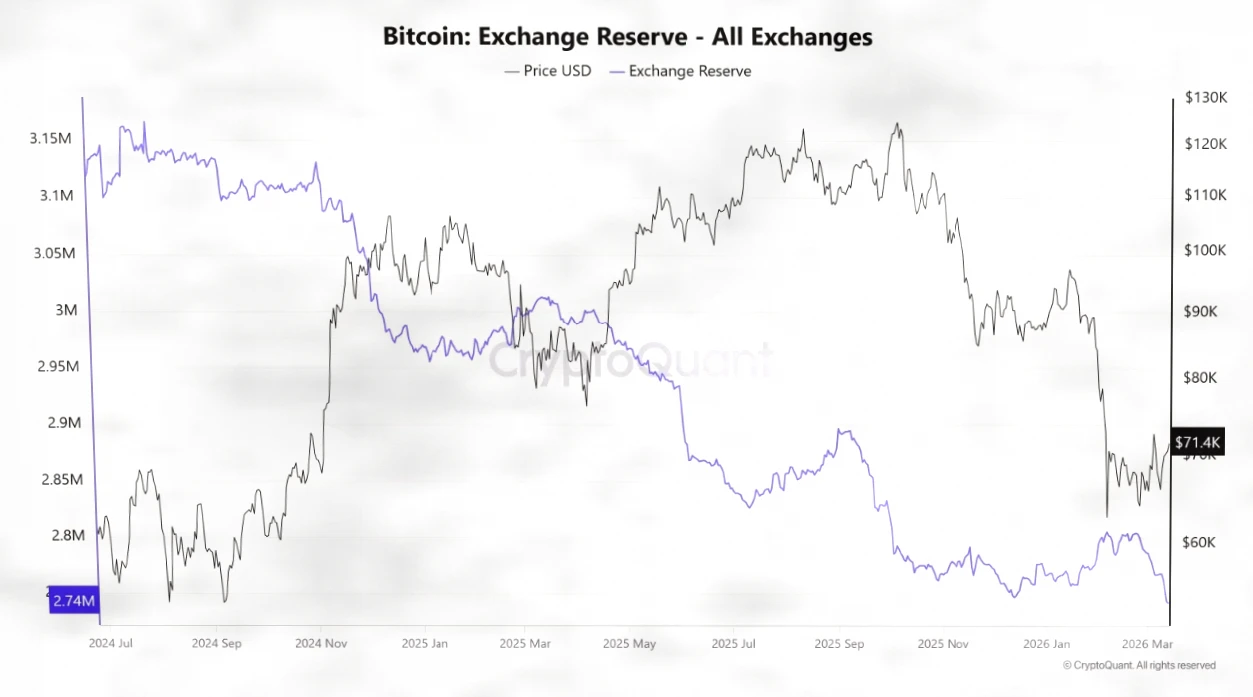
Behind the price recovery, analysis of CryptoQuant data reveals a structural shift that helps explain why this rebound has been so strong. Total Bitcoin reserves across all exchanges have fallen to approximately 2,742,794 BTC, the lowest level since 2020. A CryptoQuant chart clearly illustrates this trend: since mid-2024, exchange reserves have been steadily declining, even as prices have experienced significant volatility. Some analysts believe this reflects a continuous outflow of funds from exchanges to private wallets and cold storage, a pattern consistent with long-term holding behavior rather than preparation for selling.
The situation at Binance differs slightly within the broader trend. As the most liquid exchange, Binance's reserves briefly surged to their highest level since November 2024 in recent months, indicating a period of temporary accumulation on the platform. But this inflow was short-lived. Binance's reserves have since fallen back to around 640,406 BTC, the lowest level since January 2025, suggesting that the tokens briefly transferred to the exchange have now been withdrawn again.
Impact of Declining Reserves on Price Dynamics
The analysis clearly paints a picture of the supply situation. As Bitcoin flows out of exchanges, the supply available for sale in the spot market decreases. When investors withdraw assets into cold storage, indicating their intention to hold rather than sell immediately, this pattern has historically been accompanied by a reduction in spot selling pressure. The mechanism is simple: the fewer tokens available for trading, the harder it becomes for prices to fall.
0 comment A文章作者M管理员
No Comments Yet. Be the first to share what you think
❯
Profile
Search
Checking in, please wait...
Click for today's check-in bonus!
You have earned {{mission.data.mission.credit}} points today