

If the Strait of Hormuz experiences a prolonged disruption, it may not directly impact Bitcoin, but it could indirectly affect its price through a series of chain reactions. CryptoQuant analysis indicates that the current derivatives market appears particularly vulnerable in such scenarios, struggling to effectively absorb shocks.
Why the Strait of Hormuz is Crucial to Financial Markets
Approximately 20 million barrels of oil and petroleum products pass through the Strait of Hormuz daily, and a significant portion of global liquefied natural gas trade relies on this route. Although there are pipeline alternatives to bypass the strait, their capacity is limited, making it difficult to find effective substitute solutions in the event of a sustained disruption.
The transmission of this disruption to financial markets typically follows a fixed pattern: energy prices surge, inflation expectations rise, and central banks face a dilemma between curbing inflation and supporting economic growth, leading to tighter financial conditions and investors reducing their exposure to risk assets. This transmission chain is not unfounded; every major escalation in the Middle East over the past two decades has succinctly validated this process.
For Bitcoin, the concern lies in its position within this transmission chain. Since 2020, Bitcoin has behaved more like a high-beta risk asset rather than a safe haven. During global stress events, it often moves in sync with the stock market rather than countering it. Although River data shows that Bitcoin has risen 14% since the onset of the Iran conflict, reflecting a 60-day short-term window effect, the narrative of geopolitical safe-haven remains debatable. Historical experience indicates that the initial reaction to geopolitical shocks is often liquidity-driven selling, which stabilizes only later. During this phase, Bitcoin faces selling pressure alongside other risk assets rather than standing apart.
Signals Revealed by Open Interest Charts
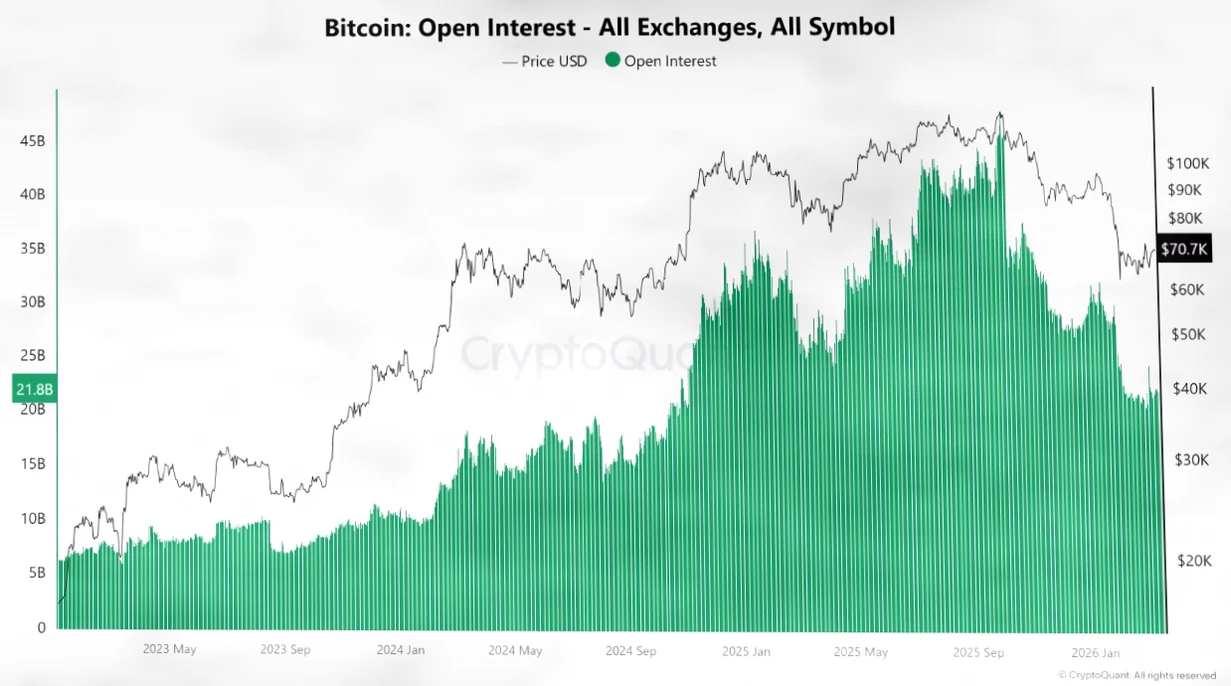
At the beginning of 2023, the value of open interest was less than $10 billion, but during the bull market in 2025, when Bitcoin prices approached or even surpassed $100,000, this figure soared to over $45 billion. Although it has since retreated from its peak, the latest data still shows it maintaining a high level of $21.8 billion. This number represents the total nominal value of leveraged futures positions opened across all exchanges.
High open interest indicates elevated leverage levels. When price movements are unfavorable for leveraged positions, these positions will be forcibly liquidated. If a large number of leveraged positions are closed simultaneously, the selling will amplify price volatility, far exceeding the effects of selling from the spot market alone. Any moderate price decline triggered by macro shocks could lead to a chain reaction through the $21.8 billion in open interest, resulting in severe price fluctuations.
Funding Rate Charts Interpret Market Positioning
The funding rate chart during the same period reveals the market's positioning status. The funding rate for perpetual futures is a periodic payment between longs and shorts. A positive rate indicates that longs pay fees to shorts, reflecting dominant bullish sentiment; a negative rate indicates the opposite.
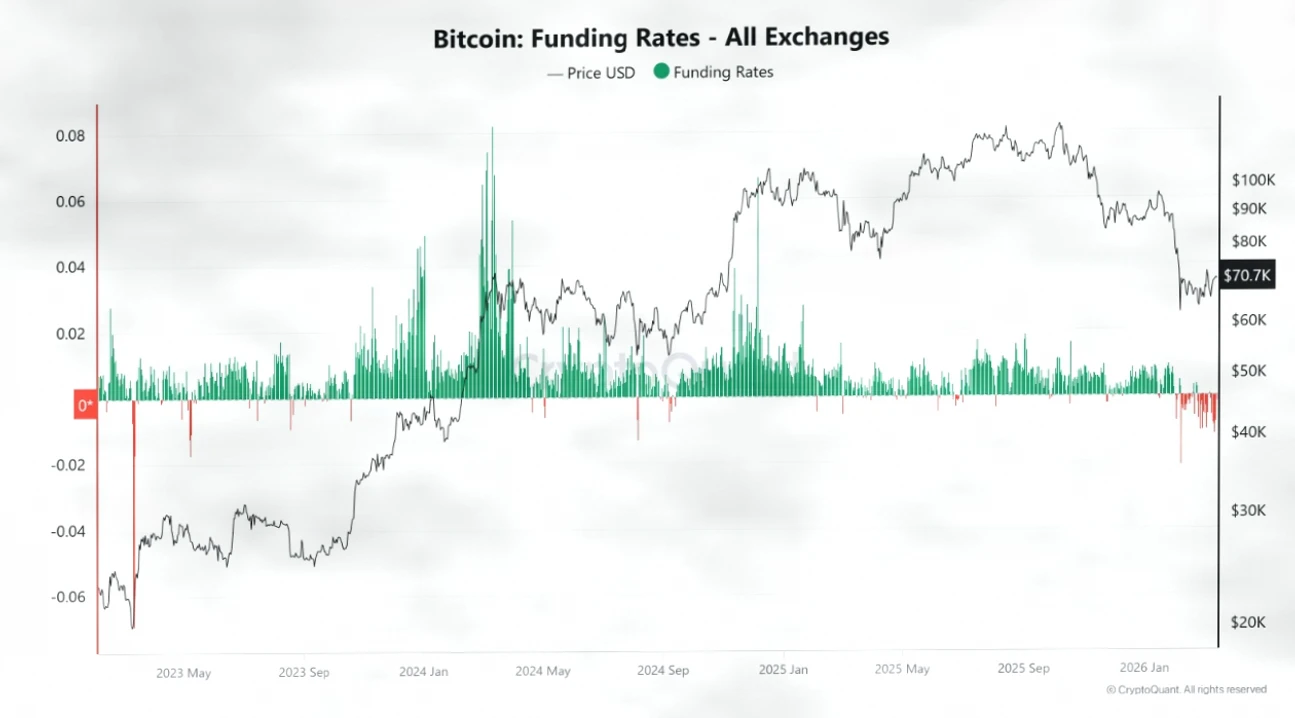
This chart shows that during the bull markets of 2024 and 2025, the funding rate was predominantly positive, with several extreme positive spikes coinciding with Bitcoin's largest price surges. Currently, the readings are close to zero, and there have been recent episodes of negative funding rates, indicating a shift in market sentiment.
Summary
This article delves into the potential transmission mechanisms of disruptions in the Strait of Hormuz on financial markets, with a particular focus on their impact on the cryptocurrency derivatives market. By interpreting open interest and funding rate data, it reveals the high leverage risks currently present in the Bitcoin derivatives market and the potential for severe volatility under macro shocks.