

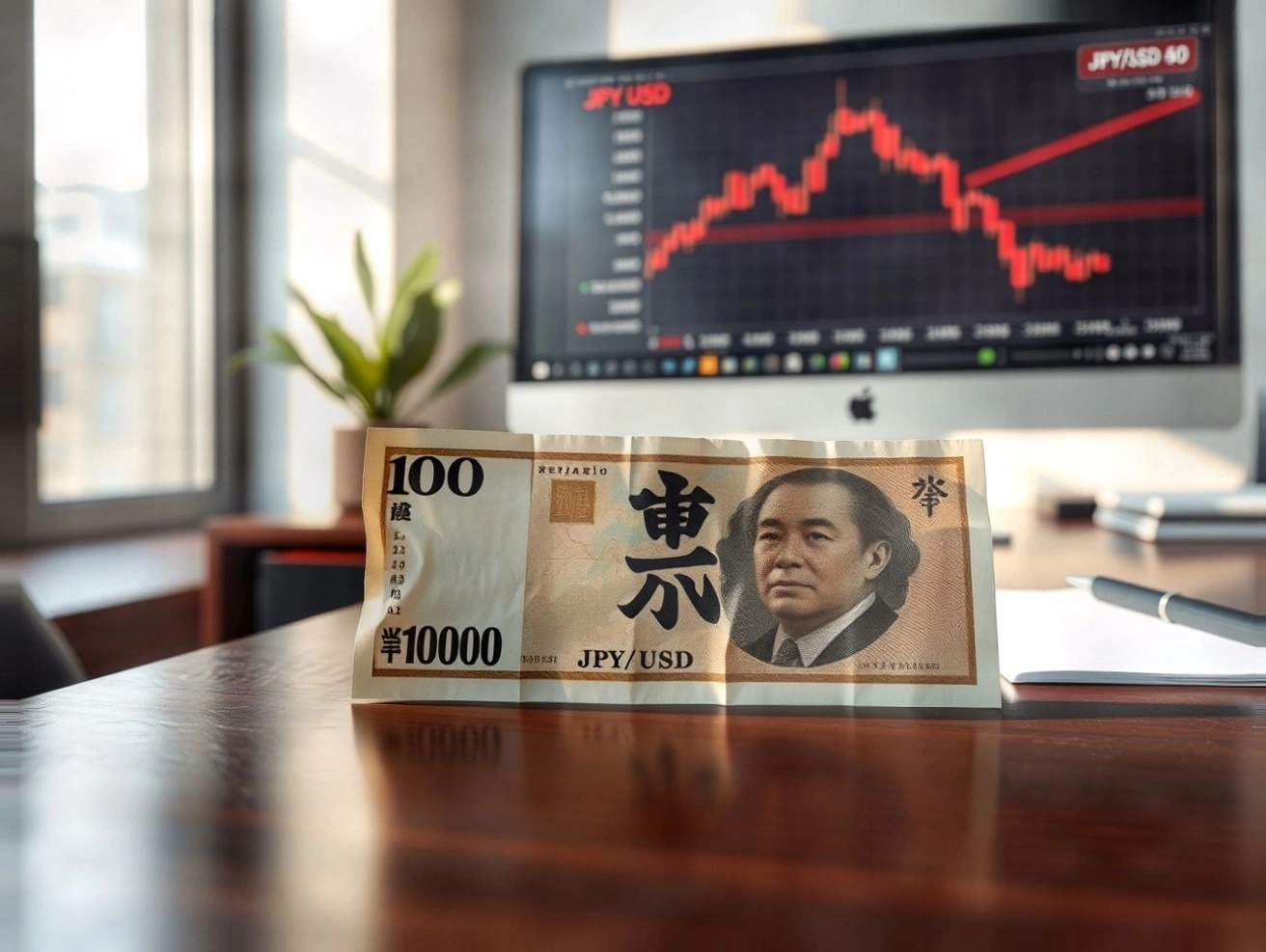
The yen's depreciation is influenced by dual economic headwinds.
In recent trading, the yen has significantly depreciated against major currencies such as the US dollar and the euro. Analysts at MUFG believe this trend primarily stems from two interrelated factors. First, the Bank of Japan has adopted an extremely cautious approach in normalizing its ultra-loose monetary policy; second, the sudden surge in global energy prices, reminiscent of the crisis in 2022, has severely impacted Japan's trade balance. Consequently, under these new macroeconomic conditions, the yen's role as a traditional safe-haven asset is being tested.
Japan relies almost entirely on imported fossil fuels, so any rise in oil and liquefied natural gas (LNG) prices directly exacerbates the country's trade deficit. This dynamic forces Japan to sell more yen to cover higher energy import costs. Meanwhile, other major central banks, such as the Federal Reserve, have paused or hinted at possible rate cuts, which historically could support the yen. However, the Bank of Japan's continued delay in policy shifts has further widened the key interest rate differential, affecting currency liquidity.
The Bank of Japan's delicate policy dilemma arises from the fragility of the domestic economic recovery. Although the inflation rate has lingered above the 2% target for over two years, wage growth remains unstable. Additionally, private consumption data shows signs of weakness. Governor Kazuo Ueda has repeatedly emphasized that policy must rely on data, requiring sustained evidence of a virtuous cycle between wages and prices before considering exiting negative interest rates and yield curve control.
MUFG's report highlights several key constraints on the Bank of Japan's policy:
As a result, the market generally perceives the Bank of Japan as being “behind the curve” in its response, leading to ongoing speculative pressure on the yen. This perception creates a self-reinforcing cycle, where the yen's depreciation further introduces inflation, complicating the Bank of Japan's policy decisions.
MUFG's market expertise assessment:
As one of the world's largest financial institutions and a major trader of Japanese government bonds, MUFG's analysts provide authoritative insights into these dynamics. Their research combines proprietary trading data, macroeconomic models, and direct interactions with policymakers. The company's analysis indicates that if the Bank of Japan does not signal a clear path toward policy normalization, the yen will continue to face vulnerabilities to external shocks, particularly from commodity markets.
The table below summarizes the opposing pressures exerted on the yen:
Direct impacts of global energy shocks:
The second major factor, the energy shock, has resurfaced due to geopolitical tensions in key production regions and structural underinvestment in fossil fuel infrastructure. Given Japan's resource scarcity, its economy is uniquely sensitive to these price fluctuations. For instance, a 10% increase in benchmark prices would have a significant impact on the economy.