

Decentralized Autonomous Organizations (DAOs) are encountering challenges in their original vision as they operate in the real business world. A conflict has arisen between the principle of decentralization and the necessity of legal ownership and control.
The industry has reacted differently. DeFi News researcher Ignas referred to it as a "massive failure of cryptocurrency."
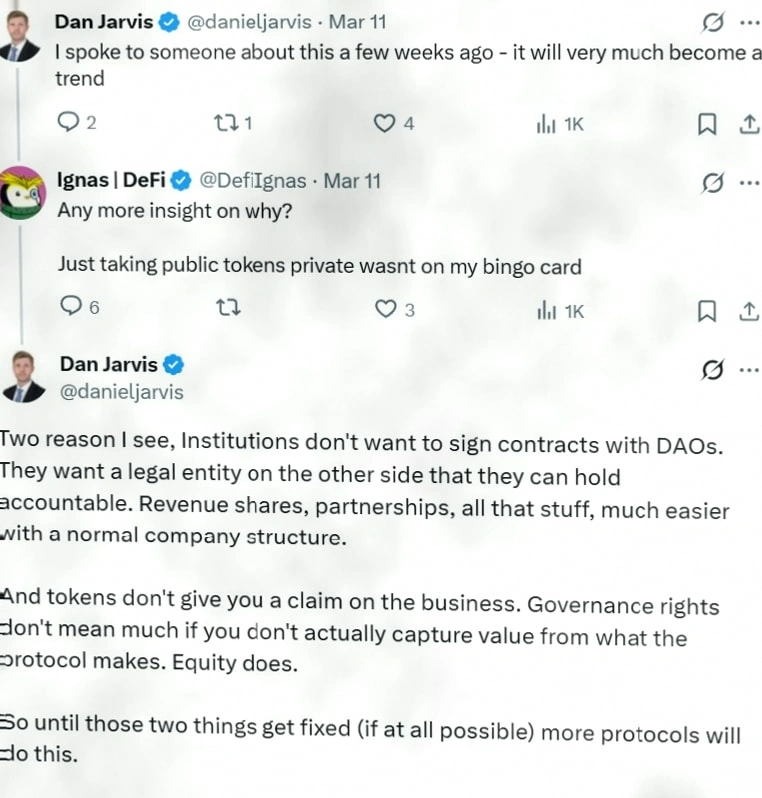
The DAO structure is hindering the development of Across's stablecoin business.
The cross-chain bridge Across Protocol currently operates with a token and DAO structure, developed by Risk Labs through a foundation model. A proposal from Risk Labs aims to transition to a newly established U.S. corporation responsible for protocol development and commercialization. ACX token holders can choose to exchange their tokens for equity in the new entity or opt for acquisition.
Matthew Pinnock, founder of the DeFi News project Altura, believes: "DAOs were supposed to replace outdated organizational structures filled with greed and distrust. However, as the industry increasingly shifts towards real-world assets and institutional capital, protocols are facing structural limitations. Institutions typically require clear legal counterparties to sign contracts and conduct due diligence, which decentralized collectives struggle to provide."
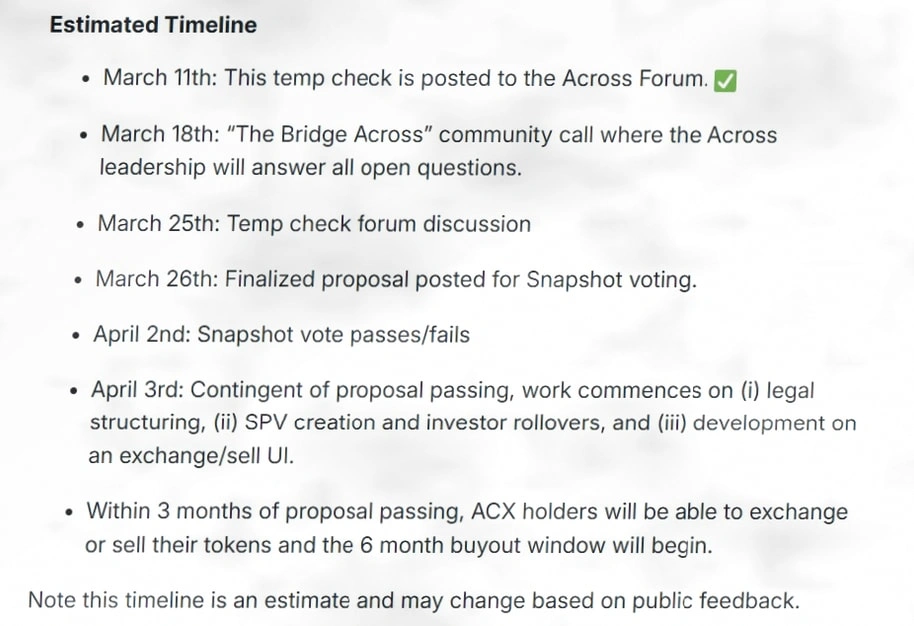
Hart Lambur, co-founder of Across, stated that in the case of Across, holding tokens "does more harm than good."

Across's business focus is on stablecoin infrastructure, which is part of the reason for its transformation. Its goal is to enable seamless exchanges between stablecoins, with costs borne by issuers or partners rather than end users. Lambur pointed out that the protocols and off-chain payment arrangements required to achieve this goal are not suitable for a DAO structure.
ShapeShift dissolved its corporate entity to become a DAO.
Tim Black, product lead at ShapeShift DAO, believes that many teams adopted the DAO structure during the last cycle as part of a broader narrative but did not fully consider the operational complexities. "Across's proposal essentially acknowledges this. They state that DAO experiments help kickstart networks, but corporate structures are better suited for the next stage of development," Black told Cointelegraph. "Many teams have actually been operating like companies in private. ShapeShift innovated through workflows (mimicking departmental setups), but over time, they create more friction than collaboration."
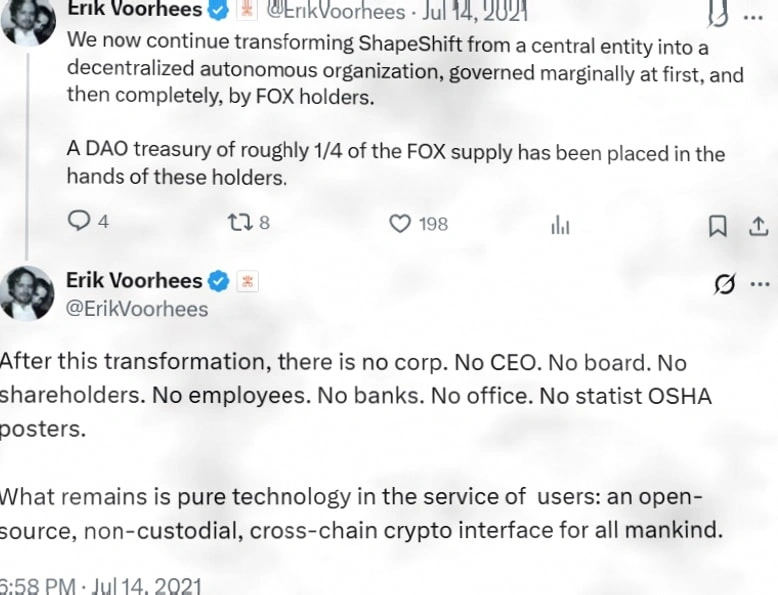
The original intention of governance tokens was coordination, not ownership... If they merely become substitutes for equity, then this experiment essentially collapses back into the corporate model it was supposed to challenge."