Bitcoin's correlation with tech stocks has hit a multi-year low, showcasing its potential as a geopolitical hedge amid recent conflicts. Despite strong ETF and stablecoin inflows, analyst Arthur Hayes cautions that the rally may be a 'dead cat bounce', highlighting ongoing market uncertainties.
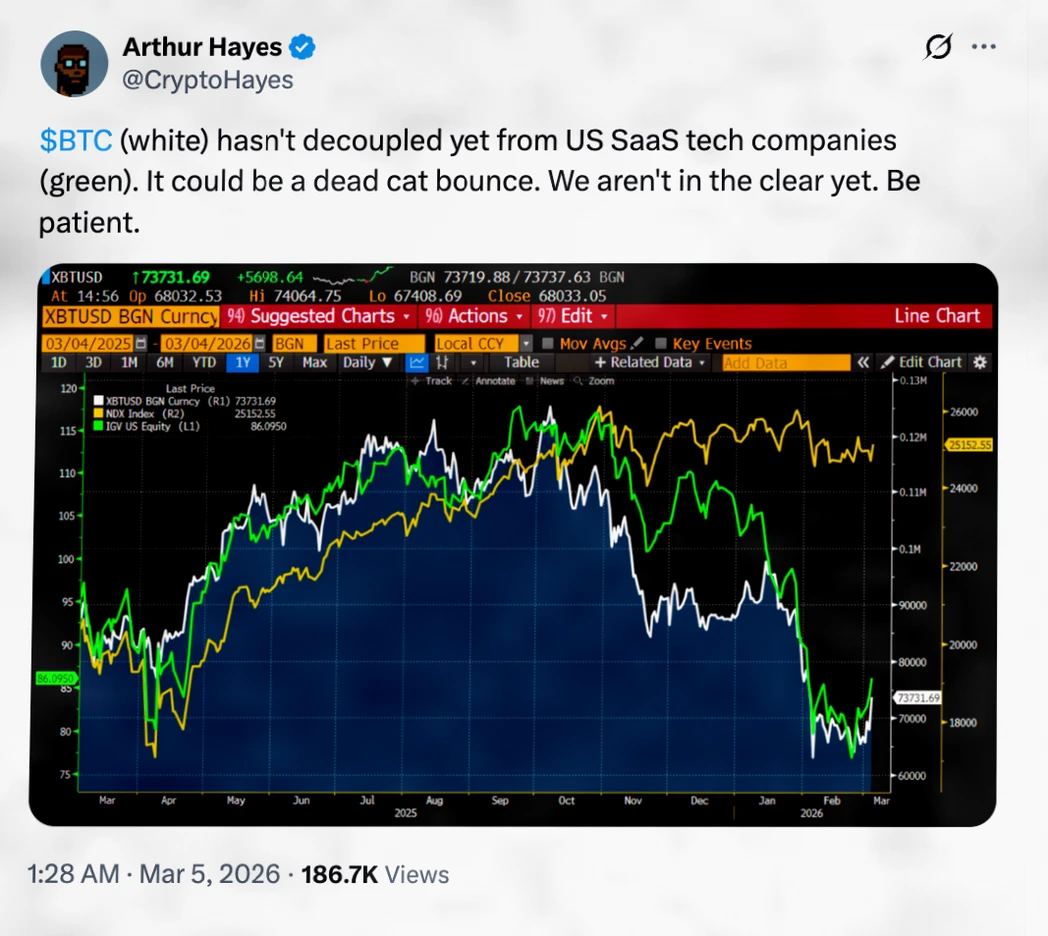
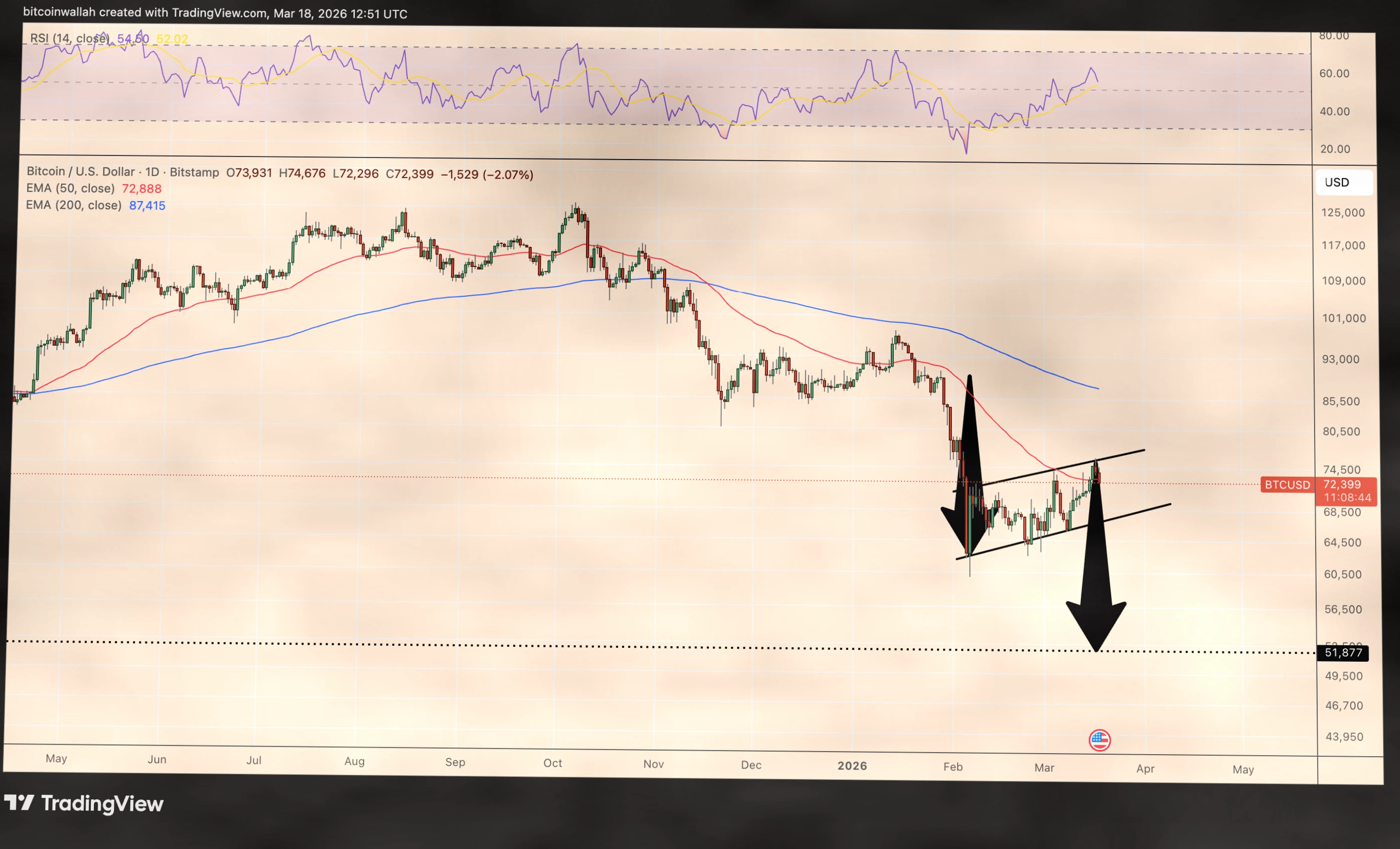
Recently, Bitcoin has outperformed tech stocks amidst US-Iran tensions, signaling growing demand as a geopolitical hedge. However, BitMEX co-founder Arthur Hayes warns that Bitcoin's recent surge might be a mere 'dead cat bounce'.
Bitcoin's Correlation with Nasdaq Turns Negative
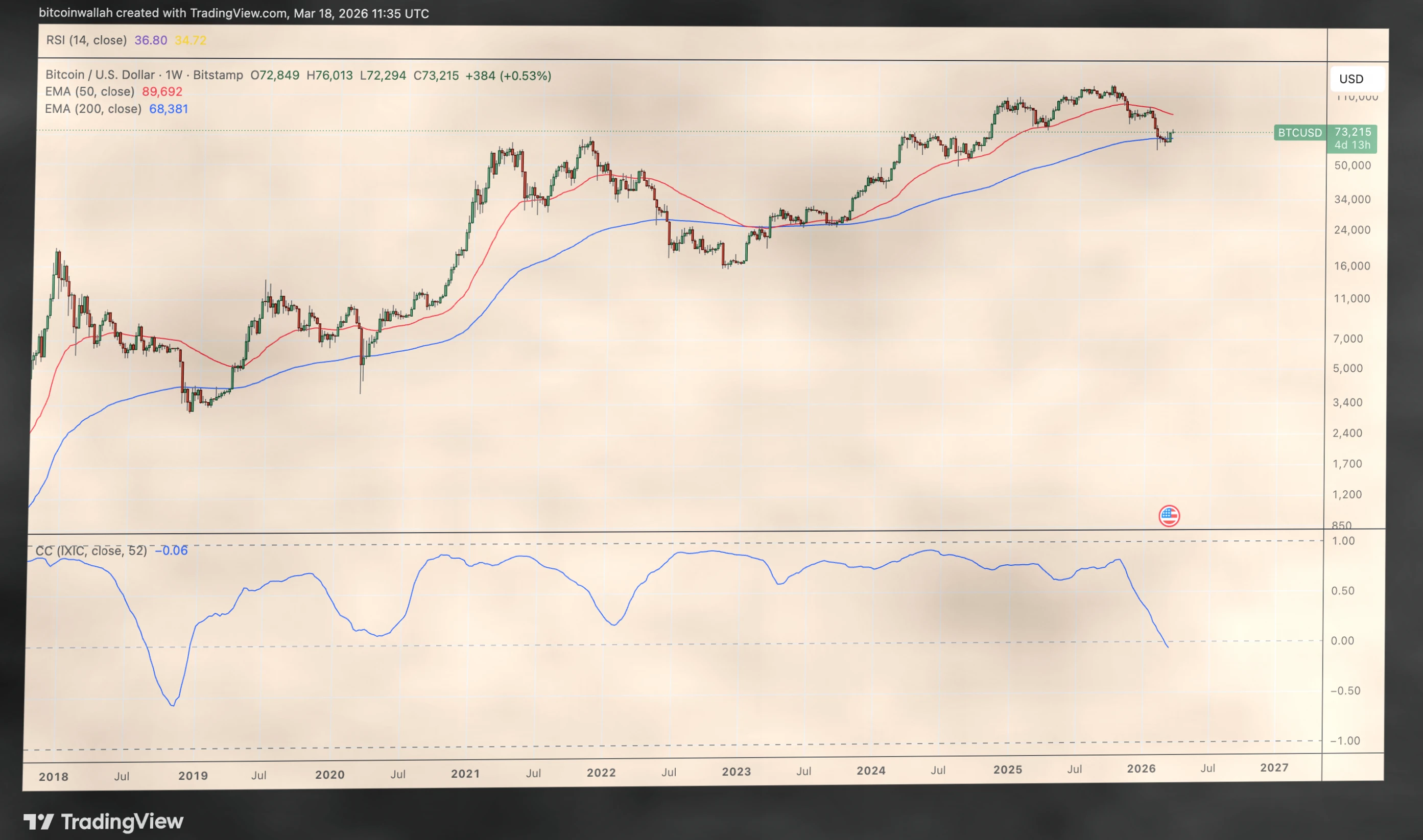
Data reveals that over the past 52-week rolling period, Bitcoin (BTC) has shown a correlation of -0.06 with the Nasdaq Composite Index (IXIC), which is heavily weighted with tech stocks. This marks the lowest level since December 2018, a significant departure from the trend of correlations ranging between 0.60 and 0.92 observed in previous years. This negative correlation first appeared in late February, coinciding with escalating tensions between the United States and Iran. Since the conflict erupted on February 28th, the Bitcoin/US Dollar (BTC/USD) price has surged over 15%, while the Nasdaq Index has fallen by approximately 2% during the same period. This divergence suggests that traders are increasingly viewing Bitcoin as a geopolitical hedge rather than simply a risk asset tied to tech stocks.
Why is Bitcoin Decoupling from Tech Stocks?
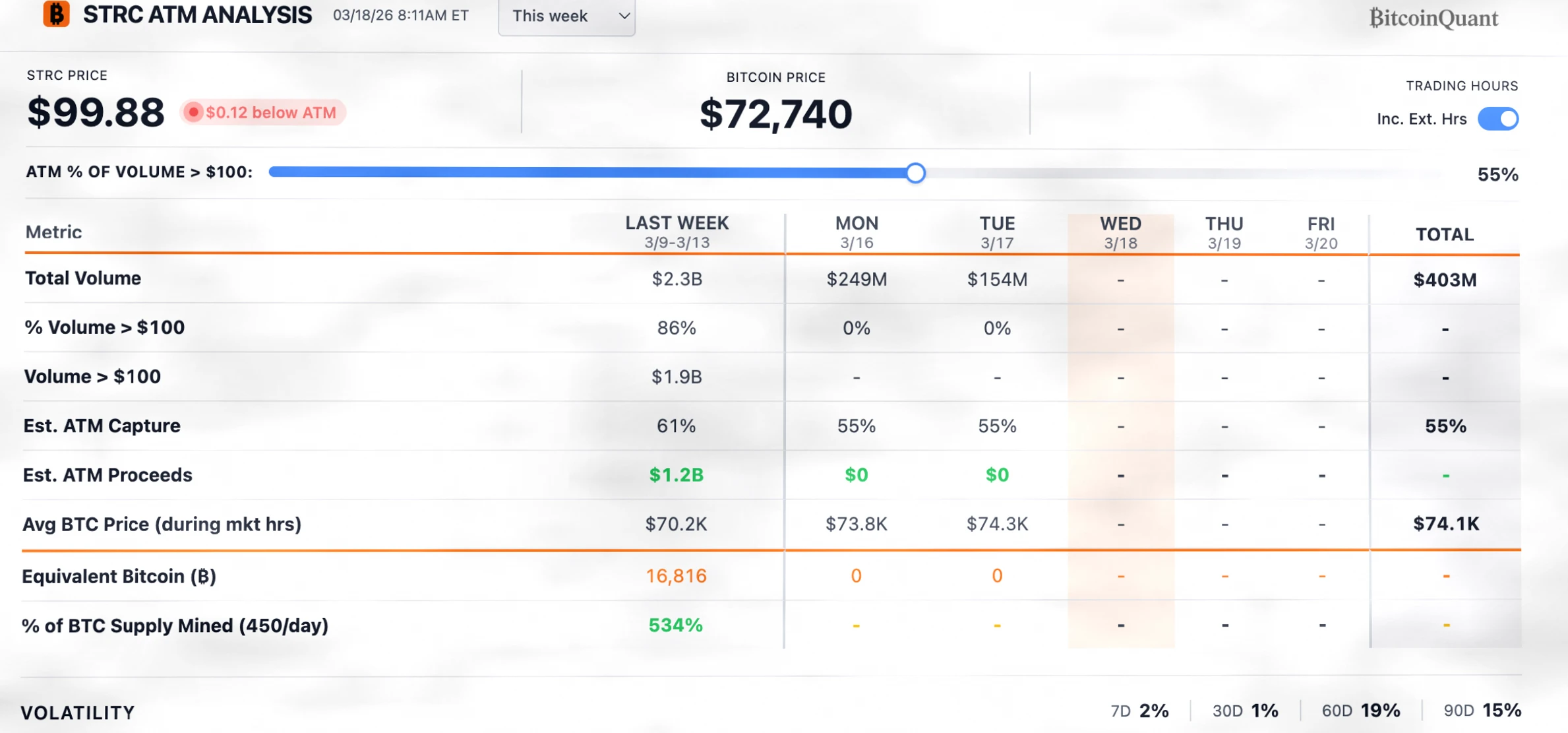
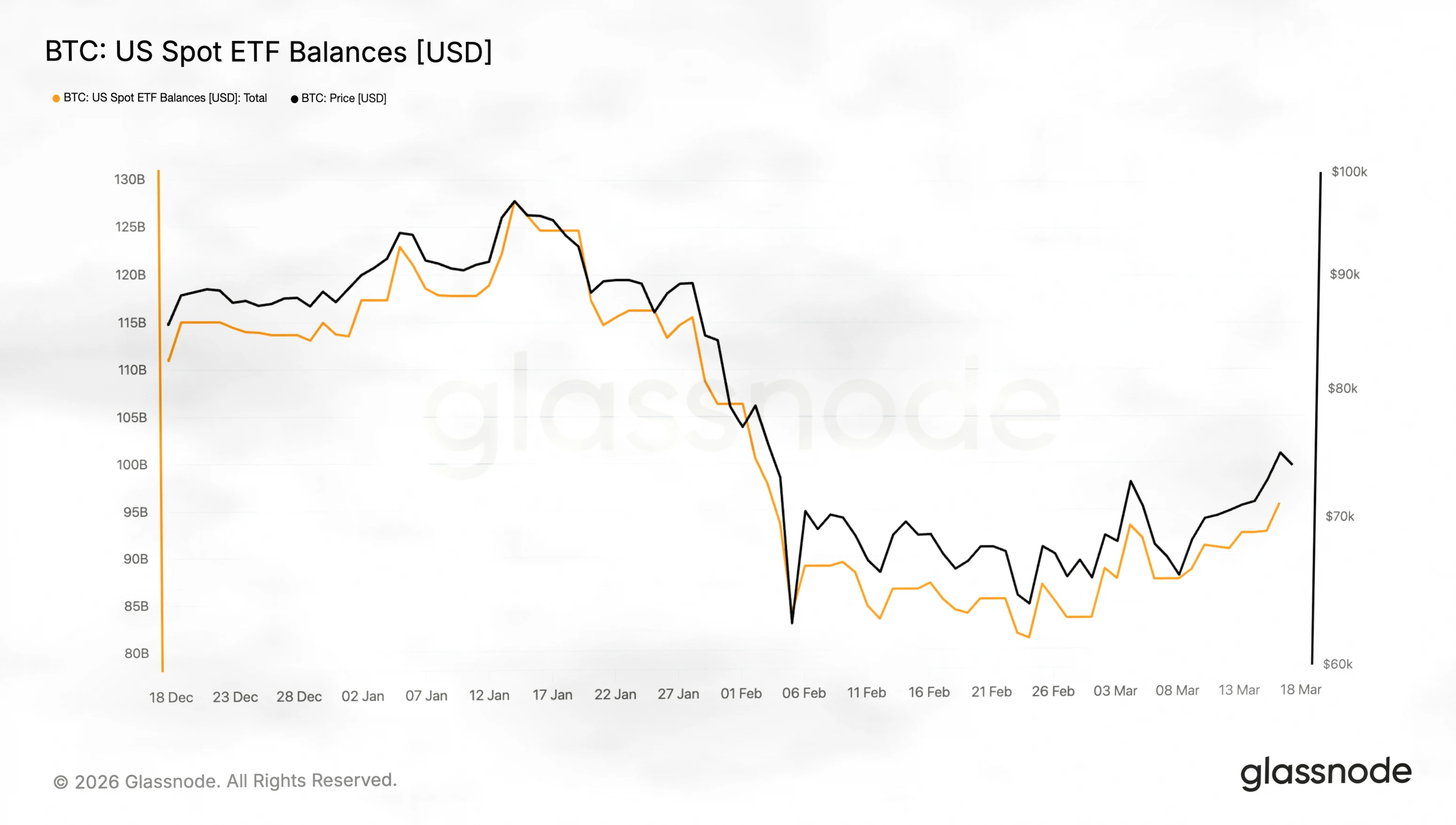
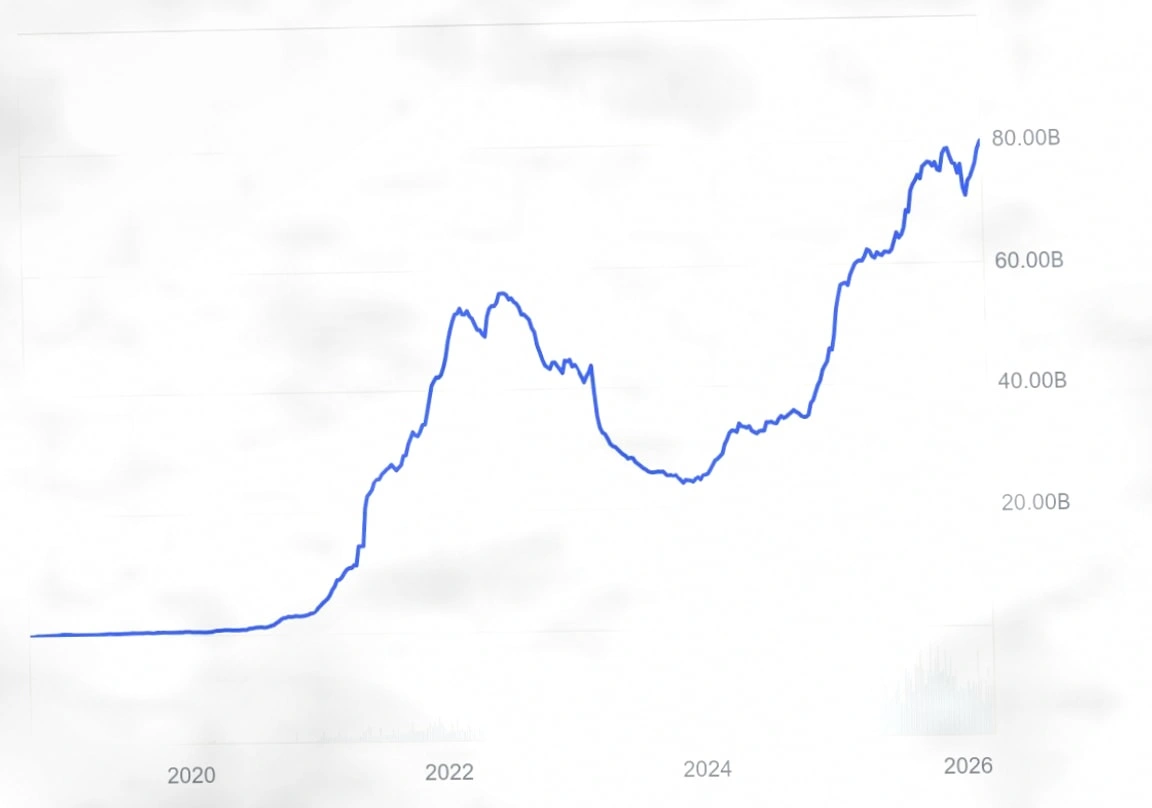
This purchase volume is equivalent to 9-10 times the amount of Bitcoin mined during the same period, indicating that demand far outstrips new supply. Concurrently, US spot Bitcoin ETFs have attracted over $12.22 billion in inflows, further solidifying a strong source of demand. Another factor supporting the bullish outlook is the increase in stablecoin liquidity associated with Middle Eastern demand during the conflict. The market capitalization of USDC has climbed to a near-record high of approximately $79.57 billion, up from around $70 billion in early February. The growth in USDC supply suggests more dollar liquidity is entering the digital asset space, further boosting demand for Bitcoin at a time when market supply is tightening.
Arthur Hayes Warns of a 'Dead Cat Bounce'
Despite this recent divergence, not all analysts believe Bitcoin has fundamentally decoupled from the stock market. Arthur Hayes expressed concerns on his social media platform X, suggesting that Bitcoin's rally might be temporary. He pointed out that unlike the Nasdaq Index, which includes defensive and diversified sectors, SaaS companies (such as Salesforce, Adobe, and Zoom) are high-growth, liquidity-sensitive assets whose movements largely mirror macroeconomic conditions, similar to cryptocurrencies.
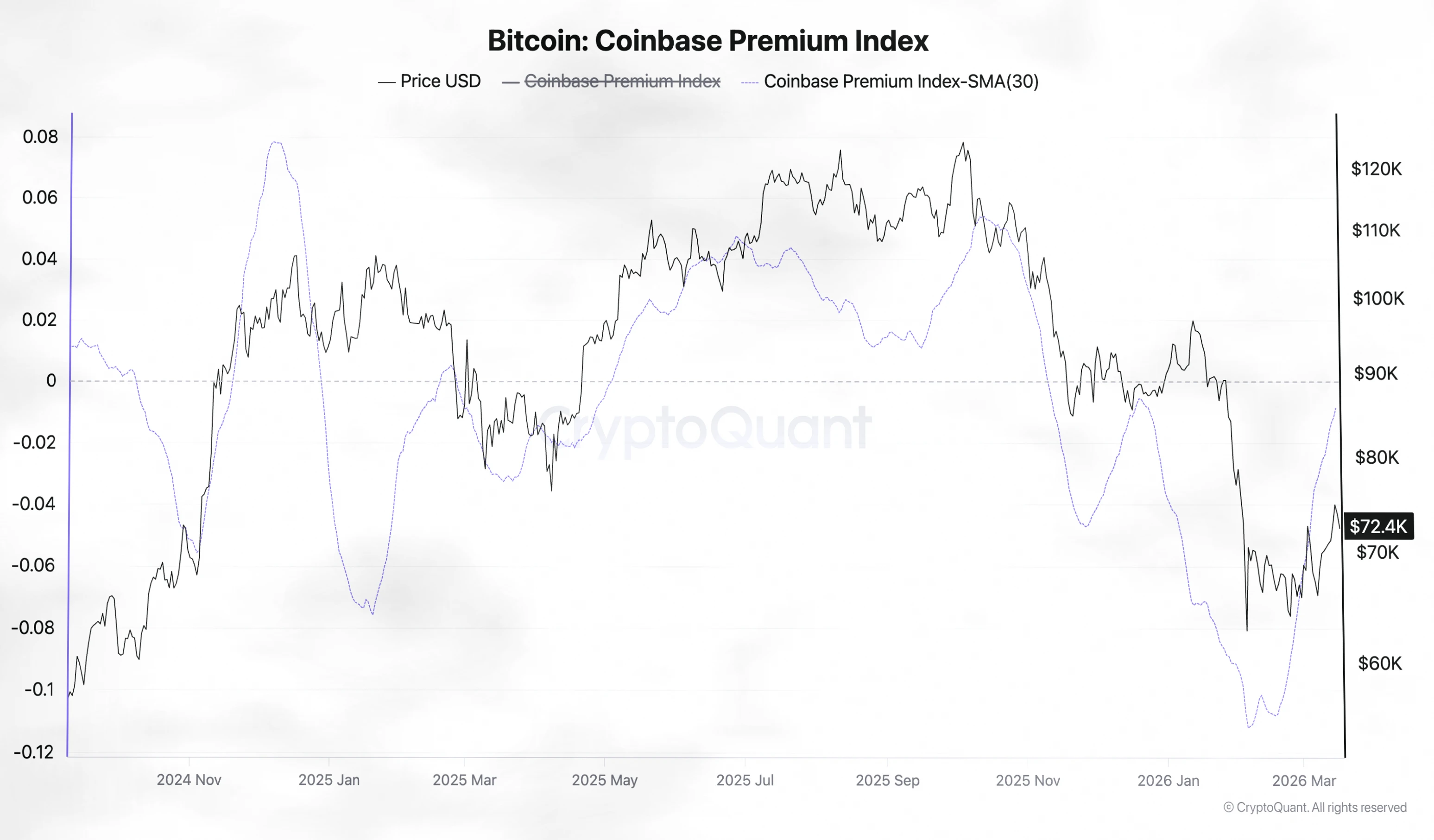
Hayes' concerns are reflected in market data. For instance, Bitcoin's Coinbase Premium Index has shown some volatility, potentially signaling shifts in market sentiment. Overall, while Bitcoin has demonstrated some independence amidst geopolitical events recently, its future trajectory remains uncertain, especially with potential shifts in the macroeconomic environment and market sentiment.
0 comment A文章作者M管理员
No Comments Yet. Be the first to share what you think
❯
Profile
Search
Checking in, please wait...
Click for today's check-in bonus!
You have earned {{mission.data.mission.credit}} points today